The Uses of Life in Relations to the Industry of Man
–
2024
Oron Catts & Ionat Zurr
In 1860, Edwin Lankester, a respected Victorian surgeon and naturalist, a close friend of prominent people such as Thomas Henry Huxley and Darwin’s tutor John Stevens Henslow, wrote:
“It would seem, when we study these wonderful adaptations to the wants of man, as though either every creature was formed first for itself and then for man, or that man was so constituted that, in the course of his history, he should be able to render every creature by which he is surrounded subservient to the purposes of his existence.”
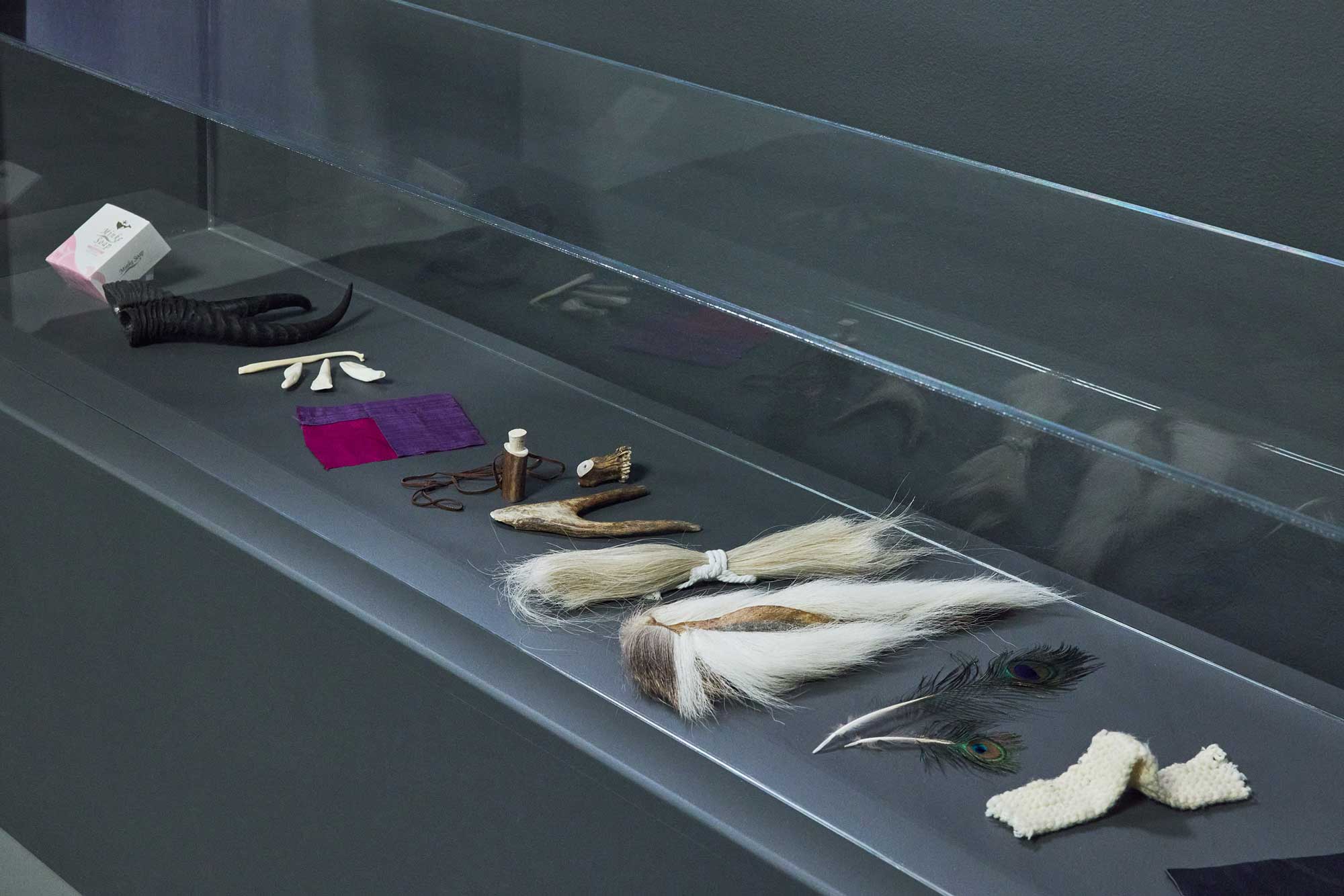
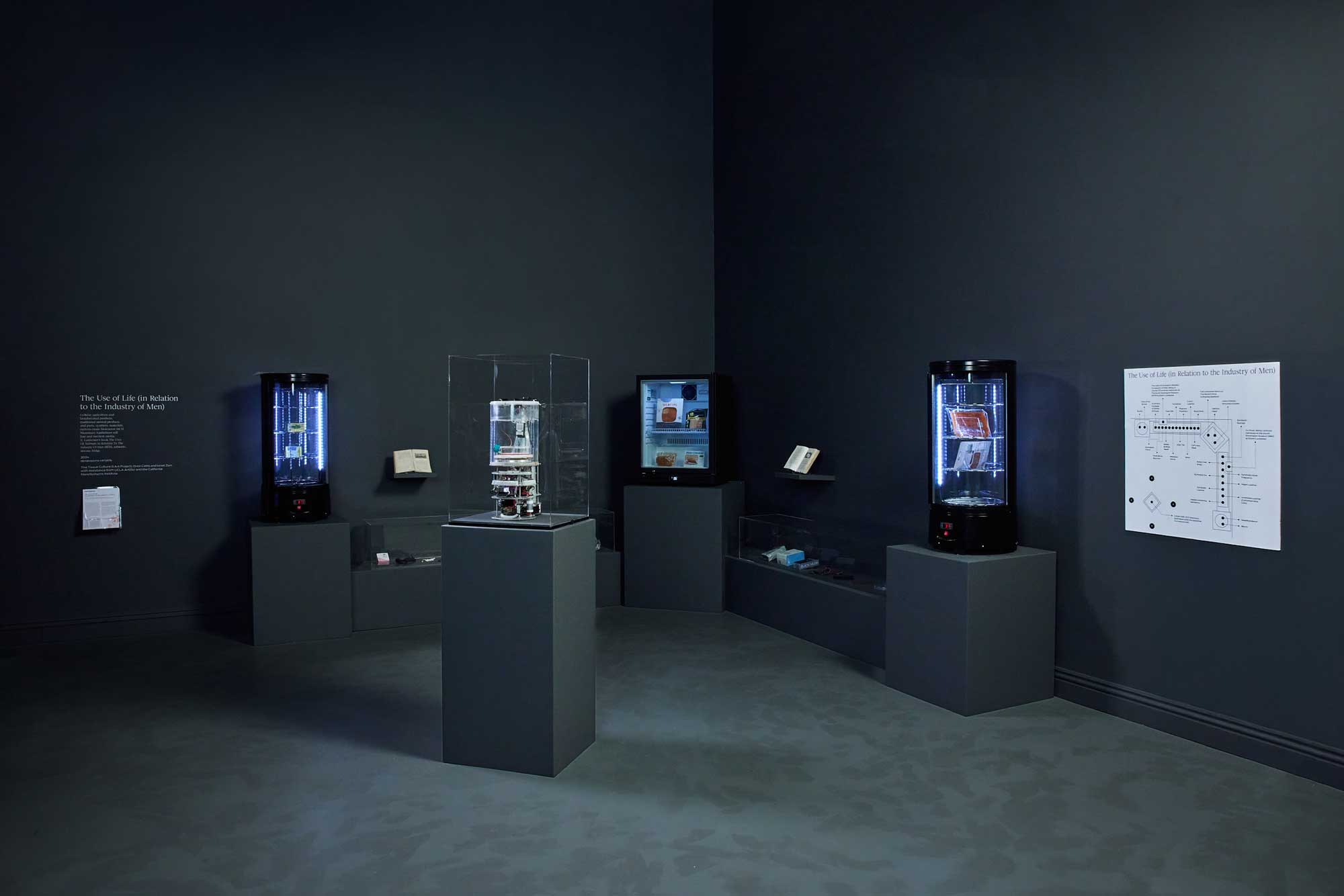
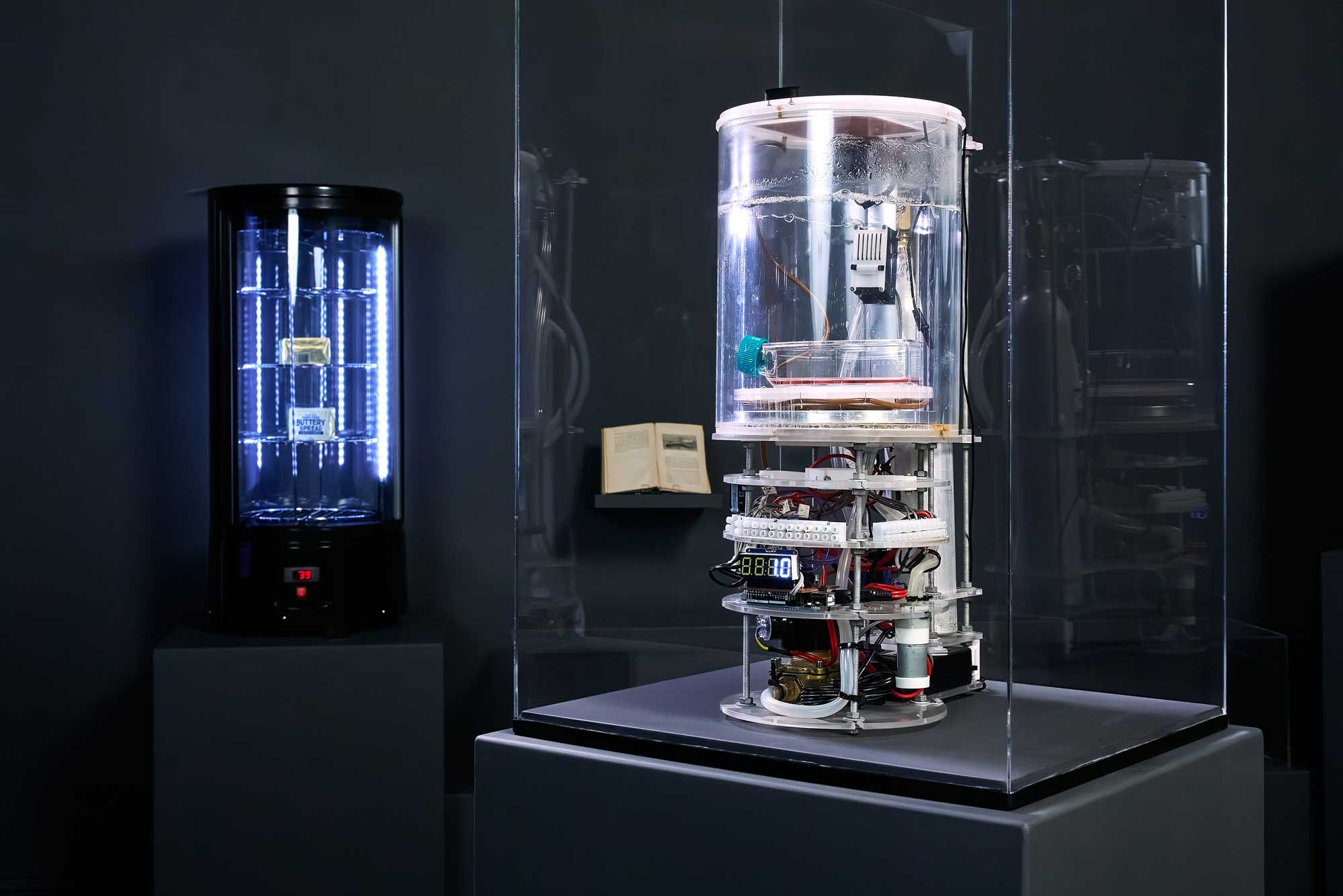
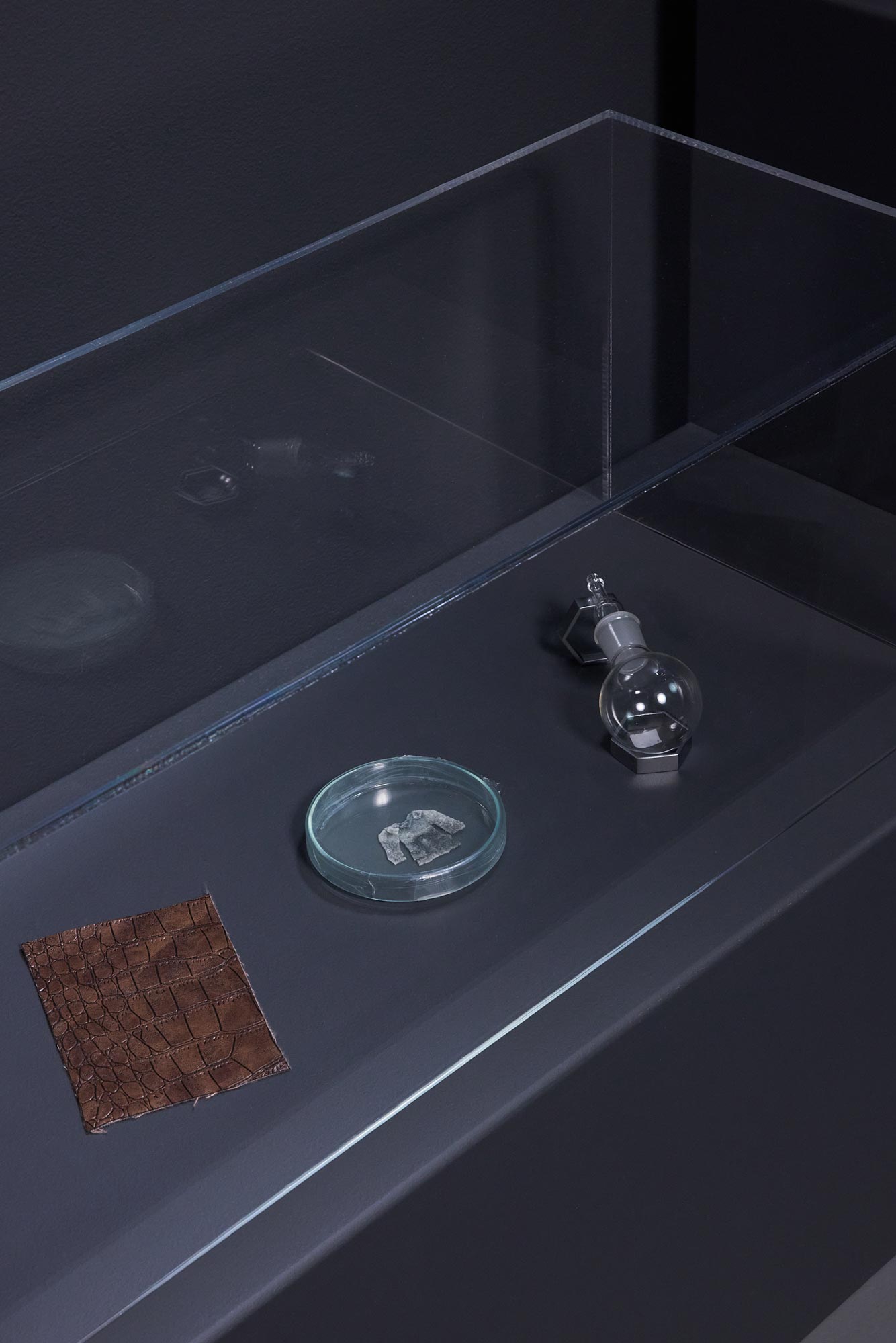
The uses of Life in relations to the Industry of Man installation, partly named after Lankester’s book title, was presented at Emergence: Art from Life, at the Japanese American Cultural & Community Center as part of Getty’s PST ART: Art & Science Collide 2024. The piece included a vitrine displays traditional animal parts and products next to their synthetic and engineered replacements, a custom-made bioreactor with living mammary epithelial cells, couple of books written by Edwin Lankester and an empty vessel.
The artwork starting points are two 19th century books by E. Lankester. The first published in 1876, titled “The Uses of Animals in Relations to Industry of Man, being a Course of Lectures Delivered at the South Kensington Museum” Lankester outlines the use of animals, their parts and secretions for non-food related products. The second book, “On Food. Being lectures delivered at the South Kensington Museum” (published in 1864) explores food; its origin and its impact on human health, and curiously also includes chapter on tobacco, coffee, tea and alcohol. In both books Lankester relationships to the non-human is explicitly instrumental. Animals are discussed as a resource from which to extract valuable commodities. There is extremely scarce discussion about suffering, ethics or animal welfare, let alone ecological impacts and limits.
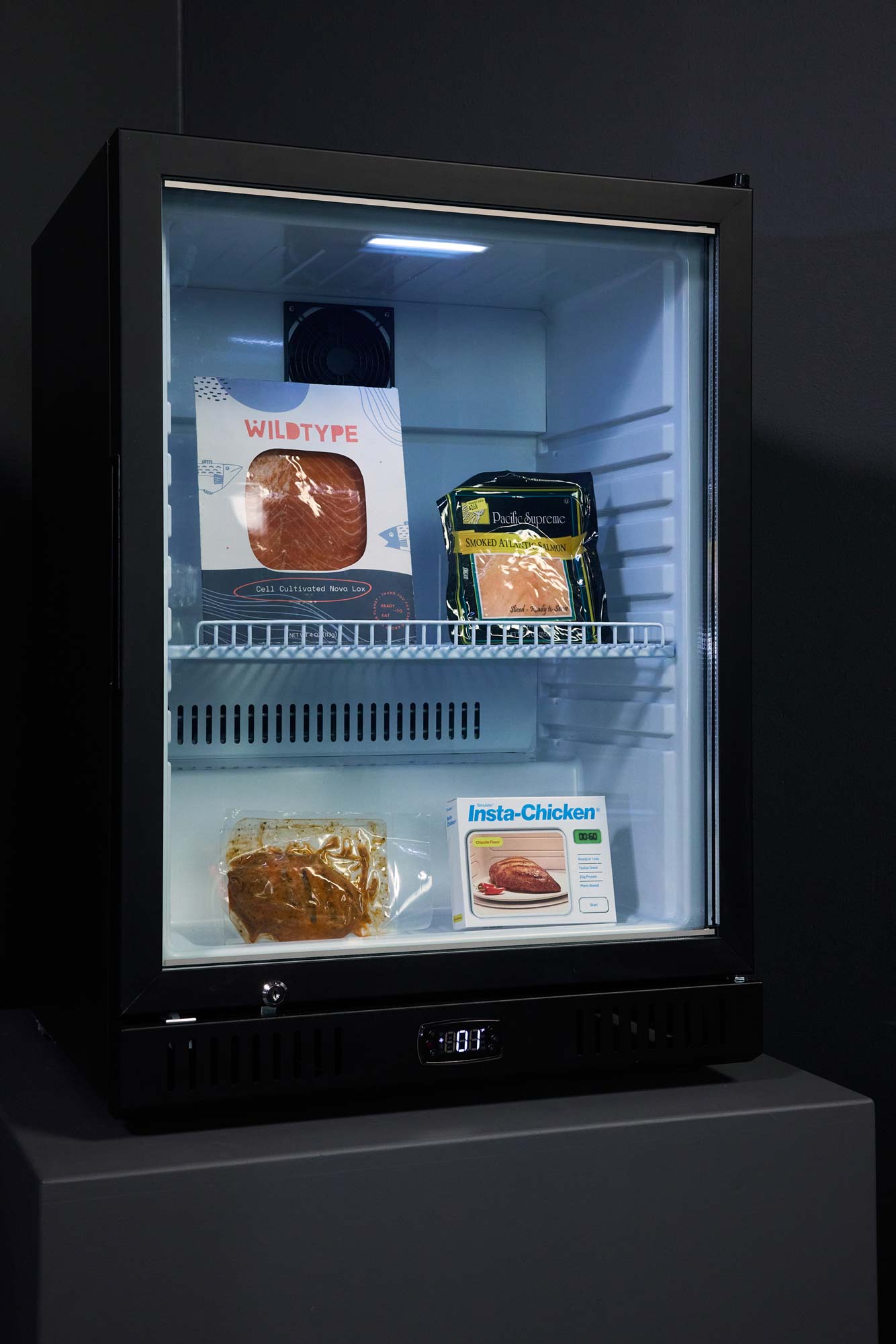
The artwork – The uses of Life in relations to the Industry of Man contrasts some of Lankester’s examples derived from the industrial revolution of the Victorian times with much later and contemporary attempts to artificially manufacture animal products without the animal. Ranging from margarine, synthetic musk and soap-free soaps to fledgeling areas such as Cellular Agriculture and Biofabrication, which are the main concerns of the work.
Cellular Agriculture and Biofabrication promise a future of abundance without consequences, through the manufacturing of animal and plant products without the whole organism, this proposition opens up a range of ontological and philosophical questions regarding relationship to the concepts of nature and life itself.
The display will attempt to raise awareness (in a non-verbal, non-didactic means) to the ways in which Cellular Agriculture and Biofabrication will require us to reformulate our relationships to non-human living being and the concept of life itself.
The installation comprises of:
- A glass refrigerator that will have Cellular Agriculture and Biofabricated products and “old style” animal/plant products.
- Preserved specimens of the organisms the products pertain to, in display cases.
- A bioreactor that contains living mouse mammary gland cells.
- Examples of the parts of organisms that are considered waste or unusable by Cellular Agriculture and Biofabricated proponents.
- An empty vessel that contained vacated sentiency.