
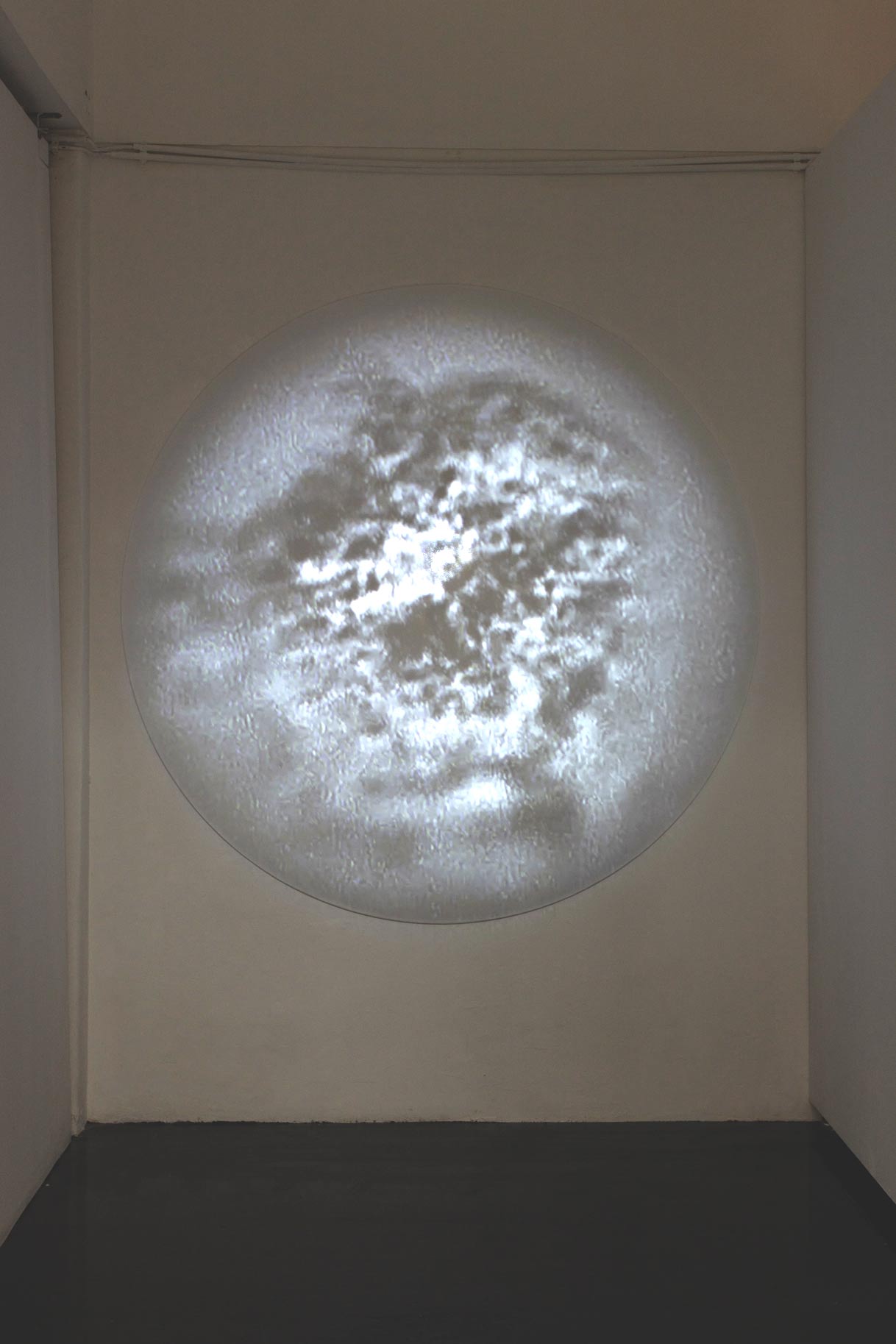
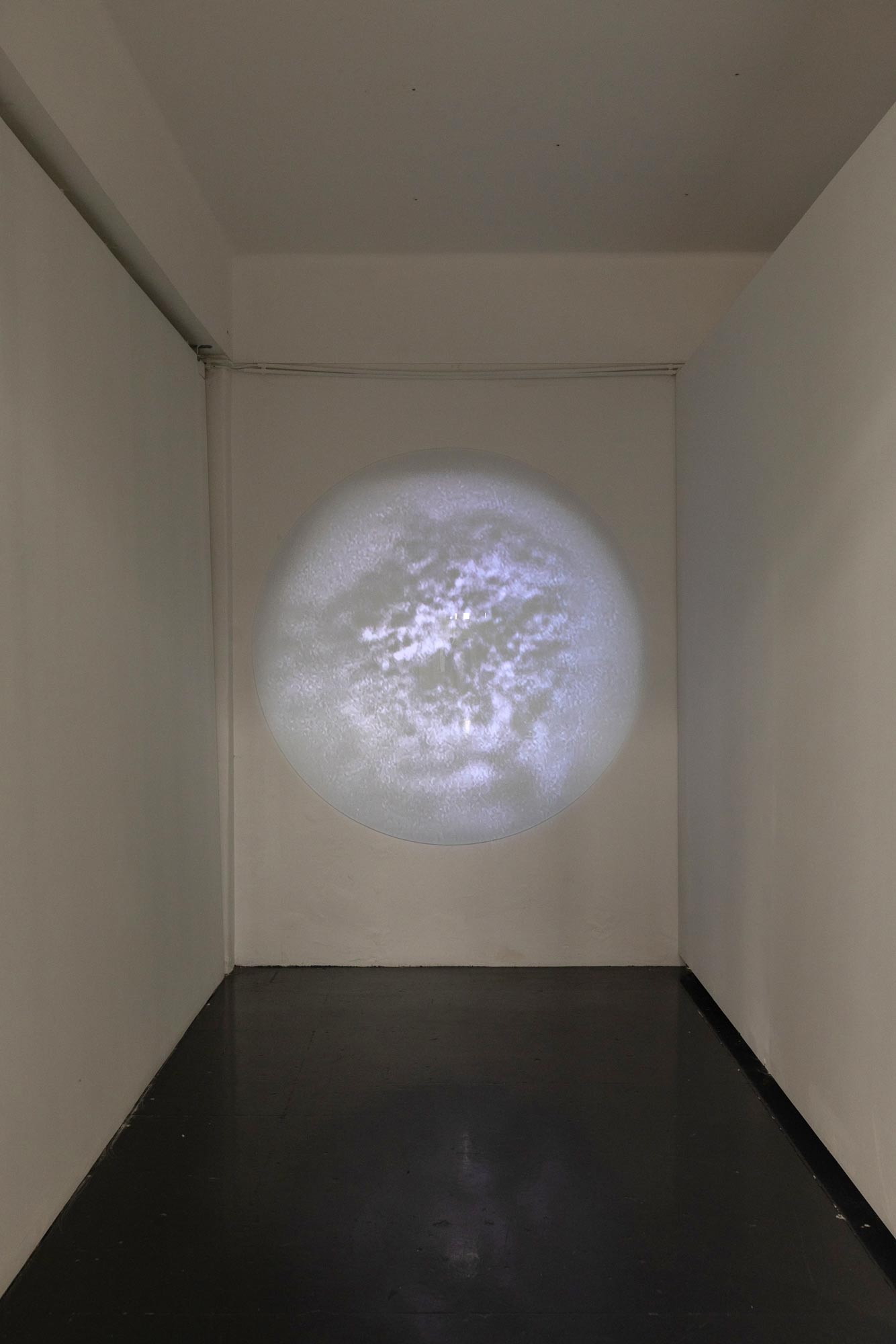
Fever 24°C – 45°C
–
2024
Ionat Zurr & Oron Catts
–
The use of the term “planetary fever” to describe climate change and global heating, has been around for a while. It makes a poetic, but non-scientific, reference to the idea that the Earth’s response to human activity is similar to our bodies’ rise in temperature when they are infected, alluding to the Human as Earth’s pathogen. Fever 24°C–45°C develops this metaphor into a visual and experiential artwork. Originally commissioned for an International Congress of Immunology, the work seeks to bridge immunology and global heating through imagery that speaks directly to immunologists’ own ways of understanding the body.
We were struck by the recurring idea of the immune system as a “sixth sense”, a distributed, intelligent network constantly assessing the body’s internal state. We wanted to explore, poetically, the effect of thermoregulation catastrophe using this complex and illusive sixth sense. Temperature regulation is a fundamental feature shared by many organisms and the planet itself. A rise beyond the optimal operating range is a sign of distress, whether in a fevered human or an overheated biosphere.
The work therefore situates temperature as not only a biological parameter but also an ecological, technological, and biopolitical one. The capacity to sense, measure, and regulate heat, thermoception, extends across bodies and systems, from cells to machines to planetary climates. The feedback loops that govern these systems form, what might be called thermobiopolitics: the management of life through thermal control.
We worked with scientists at the Gulbenkian Institute for Molecular Medicine in Lisbon, and pushed one of their best microscopes to its limits, setting it up to gradually to heat the immune cell from room temperature to 45°C. The resulting time-lapse movie shows what happens to the cell as it heats up. Within the video, organelles drift like tectonic plates. The cell undergoes extreme stress: the cytoplasm erupts like a volcano, and the mitochondria rupture, spilling their contents.
Our intention was never to illustrate scientific findings, but to evoke a non-verbal, affective understanding of the stakes involved in global heating. Through the intimate scale of a single immune cell, projected on the dome to appear as a planet Fever 24°C–45°C invites viewers to reflect. Interestingly, after viewing the work, a physiologist proposed adapting the same method to study heatstroke in red blood cells; an unexpected reminder that the transfer between art and science can flow in multiple directions
Acknowledgments:
- Supported by ENLIGHTEN+ Residency
- Luis Graca and his laboratory team
- Dr. José Rino
- Marta De Menezes
- Claudia Figueiredo
- Annie Hung
- Reegan Jackson
- Guy Ben-Ary